


Who Was A. E. Waite?
Born in 1857, Arthur Edward Waite was a scholar of mysticism, ceremonial magic and Christian esotericism. He joined the Hermetic Order of the Golden Dawn, a secret society deeply invested in symbolic correspondences between tarot, astrology, Kabbalah and elemental philosophy.
Waite believed tarot was more than a fortune-telling tool. He saw it as a symbolic map of spiritual development — a visual allegory of the soul’s journey.
When he commissioned Pamela Colman Smith to illustrate a new deck in 1909, his intention was not to create something decorative. He wanted to encode layered symbolism into a format accessible to the public.
The Major Arcana as Spiritual Progression
Waite reinterpreted the Major Arcana as stages of spiritual initiation.
The Fool was not simply a reckless wanderer — he represented divine innocence and spiritual potential.
The Magician embodied conscious will.
The High Priestess symbolised hidden knowledge.
Judgement reflected awakening.
This sequence created a narrative arc often referred to as “The Fool’s Journey,” representing the soul moving through growth, challenge, transformation and awakening.
While the idea of the Fool’s Journey evolved later, its structure is rooted in Waite’s spiritual framing of the Major Arcana.
Elemental Structure in the Minor Arcana
Waite retained Golden Dawn correspondences in the Minor Arcana:
Wands = Fire (action, drive, will)
Cups = Water (emotion, intuition, relationship)
Swords = Air (thought, conflict, communication)
Pentacles = Earth (material world, stability, work)
These elemental associations form the backbone of most modern tarot interpretation.
Understanding this structure clarifies why:
The Five of Cups feels emotionally heavy.
The Knight of Swords moves quickly and decisively.
The Ten of Pentacles relates to stability and legacy.
These are not arbitrary meanings — they are structured correspondences.
Symbolism Over Superstition
Waite sought to move tarot away from superstition and fatalistic fortune-telling.
He reframed it as a tool for:
Self-knowledge
Spiritual insight
Inner awakening
His guidebook emphasised allegory and spiritual reflection rather than prediction.
Modern readers who focus on empowerment, growth and introspection are working within Waite’s intended philosophy.
Practical Application
How to work with this
Nearly every widely used deck follows Waite’s structural blueprint.
Even decks that reject his imagery often retain:
The elemental assignments
The card numbering system
The spiritual framing of the Major Arcana
If you read tarot today, you are likely reading within a system he helped formalise.
Understanding this adds depth and historical awareness to your practice.
Related Links
Card
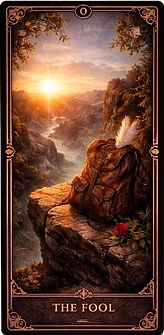
0 The Fool
Card

XX Judgement
Card

I The Magician
Card

II The High Priestess
Suits

Pentacles
Suits

Wands
Suits

Swords
Suits

Cups
Spreads

Career Direction (5 Cards)
Spreads
The Crossroads (5 Cards)
Spreads